
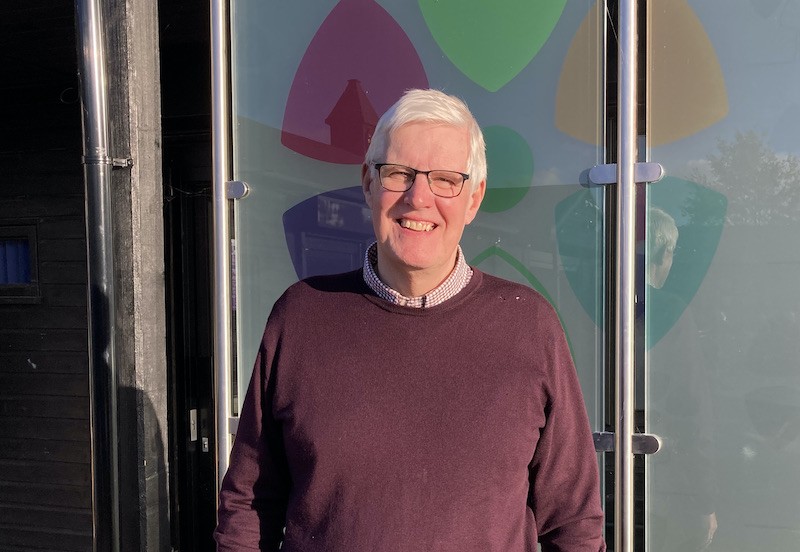
As part of Trustees’ week, which runs from 7-11 November 2022, we talk to one of our Trustees about what the position entails.
Jim Brown is a retired Metropolitan Police officer and a former vicar in the Church of England, having served in the parishes of East Malling, Wateringbury and Teston. Although he retired from the church in 2015, he still conducts some local services, including at St Mary’s Abbey in West Malling. He is also a mentor for serving vicars.
Jim started his association with Spadework as a volunteer in the café, serving customers and washing up. After getting to know the people and the charity, he developed a passion for Spadework.
“I got to know the staff and the Trainees and discovered something quite exciting,” he said. “Being part of a dedicated team of people gave me a deep interest in the charity. When I was approached to become a Trustee, it was really the whole environment that made me want to be in it.”
Having become a Trustee in June 2018 Jim continued to volunteer, but with the arrival of the pandemic in 2020 he felt he could not continue volunteering as it left too little time to spend on other matters. The café was closed for two years and the focus of Spadework was the wellbeing of the absent Trainees and how they could return safely after lockdown. As Spadework’s place in the community shifted, more support was provided for local people.
Jim said that becoming a Trustee had been very rewarding but also challenging. “One of the biggest challenges was learning what my role as a Trustee is,” he said. “Understanding that it is a strategic and supportive role and not an operational role was challenging. As a Trustee you have got to learn your role and understand it.”
There are 10 people on the Spadework board of trustees under the guidance of the Chairman, Sue Murray. The board meets six times a year and acts as a critical friend to the charity’s Senior Leadership Team, focussing on good governance and long-term strategic direction. The trustees, who are unpaid, use their skills and experience to set the charity’s strategy and objectives and help it to meet them. Ultimately the board ensures that Spadework continues to run in the interests of the people it is here to support.
Jim explained, “As a board we are reminded of our roles and responsibilities,” he said. “As Trustees we are there to create the strategy and support the work of the charity.”
Jim lives locally and as a frequent visitor is well known by staff and Trainees. He sees the day-to-day challenges. “I don’t think you can be supportive or contribute to strategic discussions if you don’t know what the organisation is about,” he said.
So, what does Jim enjoy about being a Trustee? “Being a part of this great team of people, watching the charity grow in our case, working alongside some very dynamic leadership, it energises me. When I retired, I realised I still had a lot to offer. I have skills and experience to share. When you retire, if you have good health I think if you can contribute it’s a good thing. It’s about making full use of my skills and enabling others to reach their potential within the organisation.”
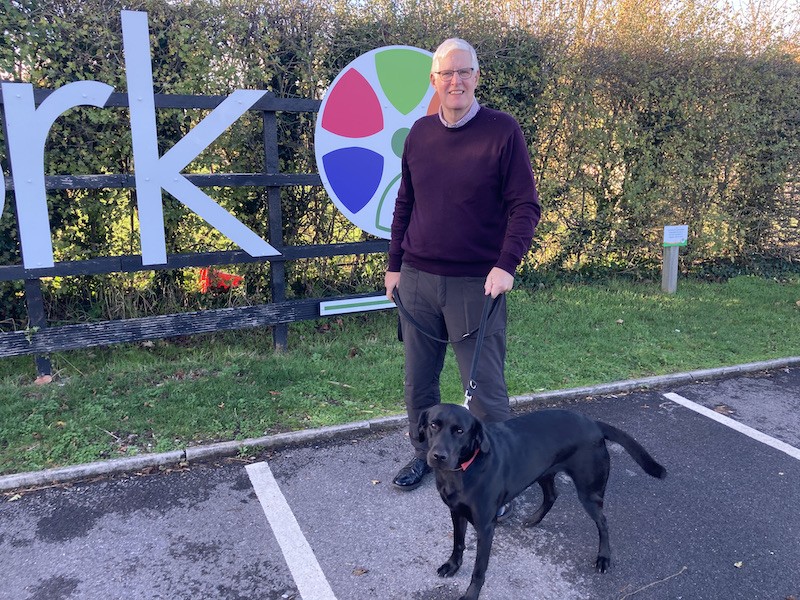
Jim says he would recommend the role of a Trustee to other people. Although he has been invited to become a Trustee of other organisations, Jim prefers to devote his time to Spadework. He estimates that he spends about eight hours a week at or on Spadework matters. He always receives a warm Spadework welcome from staff, volunteers and Trainees, especially when he drops in with Tilly, his black Labrador.
“It’s been very rewarding, and I think we are lucky to see the organisation grow in the last five or six years,” he said. “It has been more than a privilege. It has been an overwhelming joy.”